

A sales graduate assessment is one of the most common hurdles you will face when applying for graduate sales, retail management, and many marketing-related roles. It is designed to show an employer how you think, how you behave at work, and how you sell or influence in realistic scenarios.
If you are preparing for a graduate scheme, do not worry if you have never done an assessment before. These tests are learnable. Once you understand the formats and practise in the right way, your confidence improves quickly.
In this guide, you will learn:
- What a sales graduate assessment is and why employers use it
- Common types of marketing assessment and sales assessments
- Realistic examples of retail assessment questions and how to answer them
- How to prepare for a retail assessment test and other marketing assessments
- What to look for in retail assessment software and what “good” looks like
- Extra support for interviews, including b2b sales interview questions
Understanding Sales Graduate Assessments
What is a sales graduate assessment?
A sales graduate assessment is a set of online tests and exercises that helps an employer predict how you will perform in a sales role. Instead of only relying on a CV and interview, the employer uses structured tasks to measure your ability in key areas such as communication, persuasion, problem solving, resilience, and customer focus.
Why employers use assessments
Graduate recruitment often attracts a high number of applicants. Assessments help employers shortlist fairly and consistently. They also reduce the risk of hiring the wrong person, because sales roles require specific behaviours, such as handling rejection, staying calm under pressure, and building rapport quickly.
How this links to marketing career paths
Many employers see sales and marketing as connected. A strong sales candidate understands customers, communicates clearly, and can explain value. Those skills transfer well into marketing roles, especially brand, account management, customer success, and commercial marketing.
Where the assessment sits in the hiring process
- Application and basic eligibility checks
- Online assessment stage
- Video interview or telephone screening
- Assessment centre, group task, role-play, or case study
- Final interview and offer
The exact steps vary by employer, but the skills assessed are usually similar across retail, FMCG, tech sales, and marketing aligned graduate schemes.
Types of Marketing Assessments You Might See
Many people search for a marketing assessment because they are applying for roles with a sales or commercial focus. Marketing assessments often test how you think, how you prioritise, and how you communicate in real workplace situations.
Common marketing assessments and what they measure
- Situational judgement tests to see how you respond to workplace scenarios, conflicts, and priorities
- Numerical reasoning to check data confidence, pricing decisions, commercial thinking, and performance tracking
- Verbal reasoning to check how accurately you interpret written information
- Personality and work style questionnaires to understand preferred behaviours and working approach
- Case studies to test problem-solving, structured thinking, and decision-making
- Presentation tasks to assess communication, confidence, and clarity
Marketing career assessment test formats often include a mini case study. For example, you might be given a short scenario about falling customer retention, then asked to choose the best plan. The best answers tend to be simple, customer-focused, and backed by evidence.
What makes an assessment effective
Good assessments do not try to trick you. They simulate reality. They measure consistency, judgement, and how you behave when something is not perfect, such as tight deadlines, unclear information, or competing priorities.
Retail Assessment Test: What It Usually Includes
A retail assessment test is common for graduate sales roles in retail, store leadership schemes, and commercial trainee programmes. It often focuses on judgement, customer service, and decision-making under pressure.
Typical sections inside a retail assessment test
- Customer service scenarios involving complaints, refunds, and difficult conversations
- Teamwork and leadership judgement, especially for graduate and management roles
- Numerical questions linked to sales, targets, promotions, basket size, and stock levels
- Priority management when several tasks compete at once
- Integrity and policy choices, such as safety, safeguarding, or compliance
Even if you are aiming for marketing later, retail assessments are useful because they train you to think commercially. In plain terms, they test whether you can make sensible decisions that protect customers and help the business.
Common Retail Assessment Questions (With Strong Answer Guidance)
Below are realistic retail assessment questions based on what graduates often face. The key is not to pick the answer that sounds most confident. Pick the one that is safe, customer focused, and sensible.
Retail assessment question 1
A customer is angry because a promotion did not apply at the till. There is a queue building and your colleague looks overwhelmed. What do you do?
- Strong approach: apologise, acknowledge the issue, quickly check the promotion details, and either apply the correct fix or explain the policy clearly. If the queue is growing, ask a colleague for quick support or open another till if possible.
- What employers like: calm tone, fair decision, teamwork, and protecting customer experience.
Retail assessment question 2
You notice a teammate is cutting corners on a process because it is busy. It might save time, but it could cause mistakes later. What do you do?
- Strong approach: address it calmly, remind them of the correct process, and offer help to keep standards high. If it is a safety or compliance risk, escalate appropriately.
- What employers like: integrity, professionalism, and willingness to speak up.
Retail assessment question 3
You have three tasks. A delivery needs checking, a customer needs help, and your manager asks for a quick report update. What do you prioritise?
- Strong approach: prioritise the customer first, because it is immediate. Then handle the delivery if it impacts stock availability, and update the manager with a realistic time estimate. If needed, ask for support or delegate where appropriate.
- What employers like: logic, customer focus, and clear communication.
Retail assessment question 4
A customer asks for advice that you are not qualified to give. They insist you should know. What do you do?
- Strong approach: be honest, stay polite, and signpost them to the correct person or process. Never guess when it could cause harm or misinformation.
- What employers like: safety, accountability, and good judgement.
Why situational judgement matters
Situational judgement questions are popular because they show how you behave in the real world. Employers want candidates who are fair, calm, and consistent, especially when it is busy or someone is frustrated.
Preparing for Marketing Job Assessments
If your goal is a marketing-aligned graduate scheme, you will likely face a mix of marketing assessments and commercial judgement tasks. Preparation is not about memorising answers. It is about learning patterns, improving your speed, and building confidence with common question formats.
Marketing job preparation strategies that work
- Practise little and often so your focus improves without burnout
- Time your practice because most assessments are paced
- Review mistakes properly so you stop repeating them
- Build a small toolkit for percentages, ratios, and interpreting charts
- Learn what the employer values and keep it in mind during situational judgement sections
Resources for practice tests
- General reasoning practice (numerical, verbal, logical)
- Situational judgement practice for customer and workplace scenarios
- Role-play and case study practice for sales and marketing graduate schemes
Tips for mastering assessment software
- Do practice on the same device you will use for the real test
- Use a quiet space and remove distractions
- Read instructions carefully, especially if there is negative marking or strict timing
- If the platform allows it, flag difficult questions and return later
- Keep a steady pace, do not rush early and panic later
If you are preparing as a recent graduate, a simple plan works best. Aim for consistent practice across two weeks, then do a timed mock assessment at the end of each week.
Choosing the Right Retail Assessment Software
If you are an employer or HR professional, you might be searching for retail assessment software to screen candidates quickly and fairly. The best tools do not just test ability. They reflect the real role and improve hiring decisions.
Features to look for in assessment software
- Job relevance: questions that match real retail and sales tasks
- Fairness and accessibility: clear instructions, reasonable adjustments, and inclusive design
- Strong reporting: useful score breakdowns, not just pass or fail
- Anti-guesswork design: question pools, randomisation, and well-built scoring logic
- Candidate experience: smooth mobile performance and clear timelines
- Security: identity checks and proctoring options where needed
Best selection tests for marketing jobs
For marketing and commercial graduate roles, selection tests often work best when they combine reasoning with judgement and communication. A strong selection approach might include numerical reasoning, situational judgement, and a short case study task. That mix helps employers identify candidates who can think clearly, act professionally, and communicate value.
Evaluating software effectiveness
- Track performance after hire, not just assessment scores
- Check whether the assessment predicts success in training and early performance
- Review candidate feedback, so you can improve the experience
- Confirm that questions stay relevant as the role evolves
If you are comparing providers, the best question to ask is simple. Does this tool measure what matters in our role, or does it just create a score?
Extra Interview Help: B2B Sales Interview Questions to Prepare For
Many graduate sales roles lead into B2B sales, account management, or business development. If that is your goal, prepare for these b2b sales interview questions too, because employers often combine an assessment with a competency interview.
Common B2B sales interview questions
- Why do you want a career in sales?
- How do you handle rejection?
- Tell me about a time you persuaded someone or influenced a decision.
- How would you research a prospect before an outreach call?
- What would you do in your first 30 days in this role?
- Tell me about a time you missed a target. What did you learn?
Keep it clear. Explain the situation, what you did, and the result. Then add a short learning point. Sales managers like people who reflect and improve.
Final Thoughts: How to Pass Your Sales Graduate Assessment
The fastest way to improve your results is to practise the core assessment types, then review mistakes until your accuracy stays high under time pressure. Keep your approach simple and consistent. Most graduate candidates fail because they do not practise, or they practise without timing and feedback.
Action step: choose one assessment type to focus on today, such as numerical reasoning or situational judgement. Do a short practice set, review your answers, then repeat tomorrow. That routine builds progress quickly.
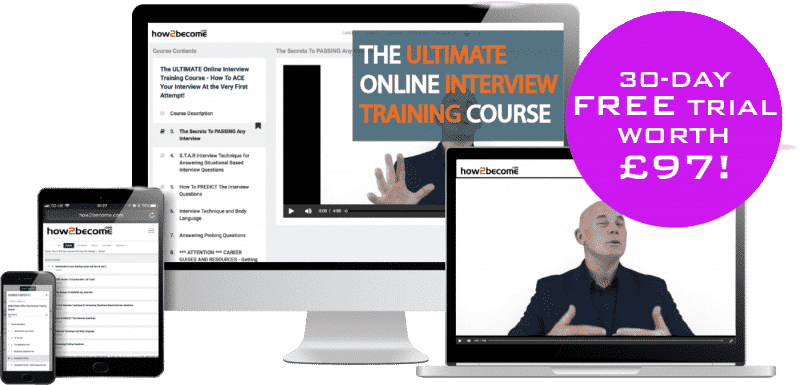
UNLOCK 50+ Interview
Questions & High-Scoring Answers Today + Get the insider video tuition for EACH question for FREE!
- The secrets to how to prepare for a job interview;
- The common mistakes made at the interview (and how to avoid them!);
- Over 50 interview questions to prepare for (and how each is assessed);
- Full answers to each of the questions so you can learn how to deliver successful answers of your own.
- Beating the competition (what you MUST do to be successful);
- Checklists and printable resources;
- All interview answers are verified by our interview panel of experts.
- Instant online access as soon as your order is placed to over 50 interactive modules.
SPECIAL OFFER £97.99 NOW: FREE with a 30-day trial!
Yes! I want to pass my interview!
Find more tips and video walkthroughs for giving a standout job interview introduction and answering tough interview questions on our YouTube channel: https://www.youtube.com/@CareerVidz